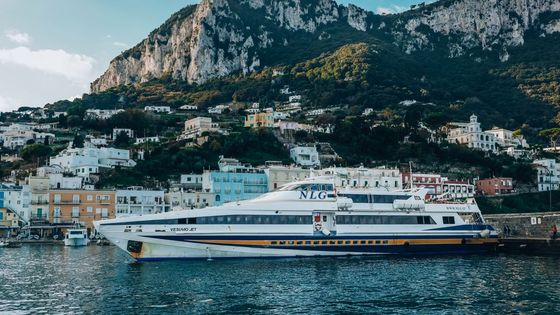
Key Takeaways
- September is arguably the sweet spot — water peaks at 24–25°C after summer, seas stay calm, and the August crowds have eased.
- The Blue Grotto entry cannot be guaranteed: the cave closes whenever swell makes the low entrance impassable, a call made each morning on conditions.
- Your tour boat never enters the Blue Grotto — you transfer to a wooden rowboat and lie flat while the oarsman pulls you through on a fixed chain.
- For groups of four or more, private charters often cost less per person than group tours, and you gain a captain who finds uncrowded coves.
- Blue Grotto entry costs roughly €18–20 per person in cash, paid at the cave, and is almost always separate from your boat tour price.
- A full-day private yacht charter starts above €1,000, while a short group loop begins around €25 per person — the format you choose drives the price more than anything else.
Much of Capri's coastline is only reachable by water, from the Blue Grotto to the Faraglioni rocks. Here's how to choose a captained boat tour, when to go, and what it costs to see the island the way locals do.
What you see on a Capri boat tour
Capri rewards anyone who circles it by sea. The island is small — roughly 6.5 square kilometres (2.5 sq mi) — but its coast is a string of caves, cliffs, and coves that the cliff-top towns of Capri and Anacapri never reveal. A boat puts you at the base of those cliffs, looking up at villas that cost more than most people's houses and swimming in water that glows turquoise over white rock.
A typical island circumnavigation takes in:
- The Blue Grotto (Grotta Azzurra) — the sea cave on the northwest coast where sunlight refracts through an underwater opening and turns the whole chamber electric blue.
- The Green Grotto and White Grotto — quieter sea caves on the south side, named for the colours the light casts inside.
- Swimming stops in coves like the one beneath the Faraglioni, where captains cut the engine so you can snorkel over rock and seagrass.
Most captains build in at least one swim, and the better ones know which cove is sheltered on the day's wind. Bring a mask — the snorkeling around the stacks is clear enough to see the bottom in 5 to 8 metres of water.
Visiting the Blue Grotto (Grotta Azzurra)
The Blue Grotto is the single landmark most people come to Capri for, and it works differently from anything else on the tour. Your boat cannot enter the cave. The entrance is barely a metre high, so the visit involves a transfer that surprises first-timers.
How the rowboat transfer works
Your tour boat anchors outside the cave mouth, where small wooden rowboats wait. You climb down into one with a local oarsman, lie back as the boat approaches the low opening, and the rower pulls you through on a chain fixed to the rock, timing it between swells. Inside, the chamber opens up and the water beneath you glows blue from light entering through the submerged opening. The visit inside lasts only about five minutes, but it's the kind of five minutes people remember for years.
When the grotto is open
The grotto closes whenever the sea is rough, because the low entrance becomes impassable and dangerous. That happens often outside the calmest months, and even a moderate swell will shut it for the day. It also closes in poor light and on some public holidays. There is no reliable way to guarantee entry in advance — the call is made on the morning based on conditions. Build flexibility into your plan and treat a Blue Grotto entry as a bonus, not a certainty.
Costs and tips
Entry is charged in two parts: a rowboat fee plus a separate admission ticket, paid to the rowers at the cave. Expect to pay roughly €18–20 per person all-in, in cash, on top of whatever your boat tour costs. Tipping the oarsman a euro or two is customary. Go mid-morning if you can — the light is strongest from late morning to early afternoon, and the queue of rowboats grows through the day in summer.
Private versus group boat tours
The two formats split sharply on price and freedom. A group tour packs 10 to 12 guests onto a larger boat with a fixed route. A private captained tour is your boat, your group, and a captain who'll linger where you want to linger.
| Factor | Group tour | Private captained tour |
|---|---|---|
| Group size | Up to ~12 strangers | Just your party (often 4–8) |
| Cost | From ~€25 per person | From ~€200 per boat |
| Route flexibility | Fixed itinerary | Adjust stops and timing on the day |
| Swimming stops | One or two, timed | As many as conditions allow |
| Best for | Solo travelers, couples on a budget | Families, groups, special occasions |
If you're two people watching the budget, a group tour gets you the same headline sights for far less. If you're four or more, the per-person maths often tips toward private — and you gain a captain who'll find the empty cove instead of the crowded one.
How much a Capri boat tour costs
Prices in 2026 run a wide range depending on format, boat, and length of day. Group tours start around €25 per person for a short loop; private charters start near €200 for a couple of hours and climb steeply for full-day trips on smarter boats. The figures below are typical starting points, not ceilings — a premium gozzo with a skipper for a full day can run well past €1,000.
| Tour type | Duration | Price (2026) |
|---|---|---|
| Group island loop | 1.5–2 hours | From ~€25 per person |
| Group tour with swim + restaurant stop | 6–7 hours | From ~€60–90 per person |
| Private gozzo, half-island | ~2 hours | From ~€200 per boat |
| Private gozzo, full circumnavigation | ~3 hours | From ~€350–670 per boat |
| Private yacht, full day | 6–8 hours | From ~€1,000+ per boat |
Note that the Blue Grotto rowboat fee is almost always separate, paid in cash at the cave. Fuel and a swim stop are usually included on private trips; food, drinks beyond water, and grotto entry usually are not. Confirm what's covered before you book.
Getting to Capri from Sorrento, Naples, and the Amalfi Coast
Capri has no airport, so everyone arrives by sea. Most boat tours depart from Marina Grande, the island's main port, but you can also join tours that leave directly from the mainland and circle Capri before bringing you back. Here's how the crossings break down.
| Departure point | Journey time | Notes |
|---|---|---|
| Sorrento | ~20–25 min | Most frequent hydrofoils; shortest hop |
| Naples (Molo Beverello) | ~40–50 min | Fast ferries from the city centre |
| Positano | ~30–40 min | Seasonal, summer only |
| Amalfi | ~50–60 min | Seasonal, often via Positano |
From Sorrento
Sorrento is the most popular launch point. Hydrofoils run frequently across the bay in about 20 to 25 minutes, and Sorrento itself is an easy train ride from Naples on the Circumvesuviana line. Many travelers base in Sorrento, day-trip to Capri, and book a boat tour that meets them at Marina Grande.
From Naples
If you're flying into Naples, fast ferries leave from Molo Beverello in the heart of the city and reach Capri in roughly 40 to 50 minutes. It's the simplest route if you're short on time and want to see Capri without overnighting on the Amalfi Coast.
From Positano and Amalfi
Crossings from Positano and Amalfi run mostly in the warmer months and take 30 to 60 minutes. Several operators sell tours that depart from these Amalfi Coast towns, circle Capri with a swim and a grotto stop, and return the same day — handy if Capri is one stop on a wider Italy trip.
Best time of year to take a Capri boat tour
Sea conditions decide your day more than anything else, and they shift through the year. The Blue Grotto's accessibility, the calm of your swim stops, and the size of the crowds all move with the calendar.
- July and August — peak heat, peak crowds, and peak prices. Seas are generally calm, so the grotto opens often, but Marina Grande and the cave queues are at their busiest. Book well ahead.
- September — arguably the sweet spot. Water is warmest after a summer of heating (around 24–25°C / 75–77°F), seas stay calm, and the August crush has eased.
- October — still pleasant for boating, water cooling, more chance of swell closing the grotto. Tours wind down toward month's end.
- November to March — many operators pause, ferries run reduced winter schedules, and rough seas frequently shut the Blue Grotto. Possible, but not the season to plan around (Capri.com Official).
If the Blue Grotto is your priority, weight your trip toward the calm-sea months of late spring through early autumn, and keep a spare day in case the cave is closed on your first attempt.
How to book a captained boat tour in Capri
Booking a private captained trip removes the guesswork — you get a local skipper who reads the weather, knows which coves are sheltered, and handles the boat while you swim. The classic Capri boat is the gozzo, a traditional wooden-hulled craft with a low deck and a canopy for shade, perfect for slipping into caves and idling off the Faraglioni. Larger yachts and RIBs are also available for bigger groups or faster full-day runs along the Amalfi Coast.
On Getmyboat you can compare captained tours and private charters in Capri and across Italy, message the captain directly, and confirm the details before you pay. A typical booking goes like this:
- Search Capri and filter for captained tours or private charters in your date range.
- Compare boats — a gozzo for four, a larger boat for eight, or a yacht for a full day — and check what's included.
- Message the captain about your priorities: Blue Grotto attempt, swim stops, snorkeling gear, a lunch stop at a waterfront restaurant.
- Confirm the meeting point, usually Marina Grande, and the start time.
- Book and pay through the platform so everything is in one place.
What's typically included on a private trip: the boat, fuel, the captain, and at least one swim stop, often with snorkeling gear aboard. What's usually extra: Blue Grotto rowboat entry (cash at the cave), food and drinks, and any fuel surcharge for a long Amalfi Coast run. Ask about capacity limits, whether the boat carries a swim ladder and shade, and what happens if rough seas force a route change — a good captain will already have a sheltered plan B.
Frequently Asked Questions
How much does a boat tour of Capri cost?
Group tours start around €25 per person for a short island loop, while private captained charters begin near €200 for a couple of hours and rise to €1,000 or more for a full-day yacht. The format you choose — group versus private, short versus full day — drives the price more than anything else. Blue Grotto rowboat entry (roughly €18–20 per person) is almost always charged separately, in cash at the cave.
Can you visit the Blue Grotto on a Capri boat tour?
Yes, most Capri boat tours include a Blue Grotto stop, but entry is never guaranteed — the cave closes whenever swell makes the low entrance impassable, a decision made each morning on conditions. When it is open, your tour boat anchors outside and you transfer to a small wooden rowboat, lying flat while the oarsman pulls you through on a fixed chain. Treat entry as a bonus and keep a spare day in case the cave is shut on your first attempt.
How long is a typical boat tour of Capri?
A short group island loop runs about 1.5 to 2 hours, while a group tour with a swim stop and restaurant visit typically lasts 6 to 7 hours. Private charters range from roughly 2 hours for a half-island circuit to a full day of 6 to 8 hours on a larger yacht.
What is included in a Capri boat tour?
On most private charters, the boat, fuel, captain, and at least one swim stop are included — snorkeling gear is often aboard too. What's usually extra: Blue Grotto rowboat entry (paid in cash at the cave), food, drinks beyond water, and any fuel surcharge for a long Amalfi Coast run. Confirm exactly what's covered before you book, as group tours and private charters differ.





 4.9 out of 5! 500,000+ reviews