Key Takeaways
- Morning slots on Howe Sound are typically calm and glassy, while the afternoon thermal builds to 15–25 knots — book according to which experience you actually want.
- Shannon Falls drops more than 335 metres, and the classic view framing it against the Stawamus Chief is only possible from the water, not from the highway.
- Anyone operating a motorized boat in Canada must carry a Pleasure Craft Operator Card; booking a captained charter bypasses this requirement entirely for visiting tourists.
- Howe Sound water stays below 12°C even in summer, making cold-water shock a genuine risk and lifejackets essential on every trip.
- Splitting a pontoon or full-day yacht charter across a larger group can bring the per-person cost well below a guided tour ticket priced at $80–150 per person.
- Humpback whales have begun returning to Howe Sound, joining harbour seals, Pacific white-sided dolphins, and bald eagles that patrol the shoreline all summer.
Squamish sits at the head of Átl'ḵa7tsem/Howe Sound, where granite cliffs, waterfalls, and steady afternoon winds meet the sea. This guide covers what to see by boat, how to book one on Getmyboat, and what a day on the water actually costs.
Why go boating in Squamish
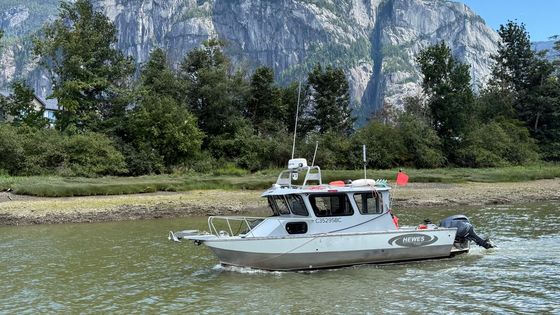
Most people arrive in Squamish by the Sea to Sky Highway, catch a glimpse of Howe Sound from the road, and keep driving toward Whistler. That's a mistake. The water here is the point. Squamish sits at the very head of Átl'ḵa7tsem/Howe Sound, North America's southernmost fjord, ringed by 1,500-metre (nearly 5,000-foot) granite walls that drop straight into salt water.
What sets Squamish apart from other coastal B.C. towns is the wind. Cool sea air rushes up the fjord toward the warm interior most summer afternoons, producing the reliable thermal breeze that made this a world-famous windsports destination. Sailors love it. So do anyone who wants a scenic cruise past waterfalls with a chance of spotting seals and eagles along the way.
Unlike the fishing-heavy guides that dominate searches for this area, this is a boating guide for a visitor who wants to get out on Howe Sound itself — by sailboat, motorboat, pontoon, kayak, or a guided tour with someone else at the helm. Squamish gives you dramatic scenery within minutes of the marina, without the long open-water crossings you'd face elsewhere on the coast.
What to see by boat in Howe Sound
Howe Sound rewards a slow morning on the water. The best sights sit close together near the head of the fjord, so even a half-day charter covers a lot of ground. Here's what to steer toward.
The Stawamus Chief and Shannon Falls from the water
The Stawamus Chief is one of the largest granite monoliths on Earth, and climbers scale its 700-metre (2,300-foot) face all summer. From the highway you see it edge-on. From the water you see the whole sweep of it, and you get a sense of scale you simply can't from land. Just south, Shannon Falls tumbles more than 335 metres (1,100 feet) down the mountainside — B.C.'s third-highest waterfall (BC Parks).. Approaching both from Howe Sound, with the Chief rising behind the falls, is the classic Squamish photograph, and it's one you can only frame from a boat.
Wildlife: seals, porpoises, eagles, and salmon runs
Howe Sound has quietly recovered over the past few decades, and wildlife has returned in force. Harbour seals haul out on rocks and log booms year-round. Pacific white-sided dolphins, harbour porpoises, and Dall's porpoises move through the sound, and lucky boaters occasionally see humpback whales that have started returning to the waterway (Ocean Wise / CORI)..
Overhead, bald eagles are almost a given — Squamish hosts one of North America's largest wintering eagle populations along the river, and they patrol the shoreline all summer too. In the shoulder season, salmon runs draw both the eagles and the seals into a feeding frenzy near river mouths. Keep a respectful distance from any marine mammal; the rule of thumb in Canadian waters is at least 100 metres (330 feet) (Fisheries and Oceans Canada)..
Anchorages and islands worth a stop
Head south from Squamish and the sound opens up. Sheltered coves along the eastern shore make good lunch stops on calm mornings, and the small islands scattered through Howe Sound give a captained tour plenty of protected water to explore before the afternoon wind builds. Because the head of the fjord is so close to the marina, you're never far from a return leg, which makes Squamish forgiving for shorter trips and first-timers.
Boats you can book in Squamish
Getmyboat is a marketplace, so what's available shifts with the season and with which local owners and captains have listings live. In and around Squamish you'll generally find a mix of sailboats built for the thermal wind, motorboats and pontoons for cruising and wildlife watching, kayaks for paddling the shoreline, and guided tours where a captain handles everything.
| Boat type | Best for | Captained or bareboat | Typical group size |
|---|---|---|---|
| Sailboat | Riding the afternoon thermal, scenic cruising | Both | 2–6 |
| Motorboat | Covering ground, wildlife watching, quick trips | Both | 2–8 |
| Pontoon boat | Relaxed family cruising, stable platform for photos | Often captained | 6–12 |
| Kayak | Shoreline paddling, close-up on coves and falls | Self-guided | 1–2 per boat |
| Guided tour | First-timers, sightseeing without any experience | Captained | 2–12 |
If you've never operated a boat, a captained charter or a guided tour is the easy way in. You get a local at the helm who knows where the seals haul out and when the wind turns. If you're an experienced skipper, a bareboat sailboat or motorboat lets you set your own pace — just note the licence requirement covered further down.
What it costs to book a boat here
Pricing on Getmyboat is set by individual owners and captains, so ranges vary with the boat, the season, and the length of the trip. The figures below are typical day and half-day rates in Canadian dollars to help you budget; always check the live listing for the exact price and what's included.
| Boat or experience | Typical day rate (CAD) | Captain included | Notes |
|---|---|---|---|
| Kayak (self-guided) | $40–90 | No | Priced per boat, often hourly or half-day |
| Pontoon boat | $400–800 | Sometimes | Great value split across 8–10 people |
| Motorboat (bareboat) | $500–1,000 | No | Requires operator card aboard |
| Sailboat (captained) | $600–1,200 | Yes | Skipper handles the thermal wind for you |
| Guided sightseeing tour | $80–150 per person | Yes | Usually 2–3 hours, no experience needed |
| Full-day yacht charter | $1,500–3,000+ | Yes | Larger groups, catering sometimes available |
(Getmyboat).
A captained trip costs more than the equivalent bareboat rental because you're paying for the skipper's time and expertise. For most visitors that premium is worth it — you skip the licence requirement, you learn the sound, and you can bareboat with confidence on a future trip. Splitting a pontoon or a yacht across a larger group often brings the per-person cost well below a guided tour ticket.
Rules, licences, and safety on the water
Canada has clear rules for recreational boating, and a visitor should know them before booking. The big one is the Pleasure Craft Operator Card (PCOC): anyone operating a motorized boat for recreation in Canada must carry proof of competency, and the PCOC is the standard credential. Transport Canada.
Here's how that plays out for a visitor to Squamish:
- Booking a captained trip? You don't need a card. The captain holds the required credentials, so a guided tour or captained charter is the simplest option for anyone visiting from abroad or without a PCOC.
- Bareboat renting a motorboat? You'll need to show a Pleasure Craft Operator Card or an accepted equivalent. A foreign visitor can often operate on a rental for a limited period with a valid boating licence or an accepted document from their home country — confirm the specifics with the owner and Transport Canada before you book (Transport Canada)..
- Paddling a kayak? No licence required, but wear a lifejacket and stay close to shore.
Squamish-specific safety comes down to two things: wind and water temperature. The same thermal breeze that draws sailors builds through the afternoon and can turn a calm morning into a choppy sound within an hour. Plan your trip early, watch the forecast, and get back before the wind peaks if you're in a smaller boat. Howe Sound water stays cold year-round — often below 12°C (54°F) even in summer — so cold-water shock is a real risk if you go in. Every boat should carry Coast Guard-approved lifejackets for all aboard, and Canada requires specific safety equipment based on boat size. Canadian Coast Guard Safe Boating Guide.
Best time of year and conditions to plan around
The Squamish boating season runs from late spring through early fall, with July and August the peak for warm weather and reliable wind. Mornings are typically calm and glassy — ideal for wildlife watching and photography — while the thermal wind fills in through the afternoon.
| Season | Conditions | Best for |
|---|---|---|
| Late spring (May–Jun) | Cool, calm mornings, wind building | Wildlife watching, quiet cruising |
| Peak summer (Jul–Aug) | Warm, strong reliable afternoon thermal | Sailing, windsports, full-day charters |
| Early fall (Sep–Oct) | Crisp, salmon runs, fewer crowds | Eagle and seal viewing, scenic tours |
| Winter (Nov–Apr) | Cold, wet, unpredictable | Limited; most listings off the water |
The daily rhythm matters as much as the season. If you want a mellow sightseeing cruise, book a morning slot. If you're chasing the sailing that made Squamish famous, the afternoon thermal is what you're after — often a dependable 15–25 knots on a good summer day.. Either way, a local captain reads these shifts far better than any app.
How to book your Squamish boat trip
Booking on Getmyboat works the same whether you want a captained sightseeing tour or a bareboat sailboat. Search Squamish, British Columbia, filter by boat type and date, and message the owner or captain directly through the platform with any questions before you confirm.
A few things to look for in a listing:
- Captained vs bareboat. The listing states whether a captain is included. If you don't hold a Pleasure Craft Operator Card, filter for captained trips.
- What's included. Check for lifejackets, fuel, and whether the price is per boat or per person — tours are often priced per head, rentals per boat.
- Group size and duration. Confirm the maximum capacity and trip length match your plans, especially for a family or a larger group.
- Cancellation and weather policy. Squamish weather can shift, so understand how the owner handles wind-outs before you pay.
Reviews from past guests are the best signal of a good captain, and local owners often share exactly which coves and beds are worth visiting the week you're on the water. Once you've found the right fit, book through Getmyboat and you're set for a day on Howe Sound.
Frequently Asked Questions
What are the best boating spots in Squamish?
The head of Átl'ḵa7tsem/Howe Sound offers the most concentrated scenery: the Stawamus Chief, Shannon Falls (B.C.'s third-highest waterfall at more than 335 metres), and sheltered coves along the eastern shore that make good stops on calm mornings. Because everything sits close to the marina, even a half-day charter covers most of the highlights.
What wildlife can you see while boating in Howe Sound?
Harbour seals, Pacific white-sided dolphins, harbour porpoises, and bald eagles are regular sightings, and humpback whales have begun returning to the sound. In early fall, salmon runs draw eagles and seals into feeding frenzies near river mouths. Canadian guidelines require staying at least 100 metres from any marine mammal.
What is the best time to go sailing in Squamish?
July and August offer the most reliable conditions, with a thermal wind that typically builds to 15–25 knots on good summer afternoons — the same breeze that made Squamish a world-famous windsports destination. If you want a calm wildlife cruise instead of sailing, book a morning slot before the thermal fills in.
Do I need a licence to rent a boat in Squamish?
Anyone operating a motorized boat for recreation in Canada must carry a Pleasure Craft Operator Card (PCOC). Foreign visitors should confirm with the owner and Transport Canada whether their home-country licence qualifies as an accepted equivalent. Booking a captained charter sidesteps the requirement entirely, since the captain holds the credentials.




 4.9 out of 5! 500,000+ reviews