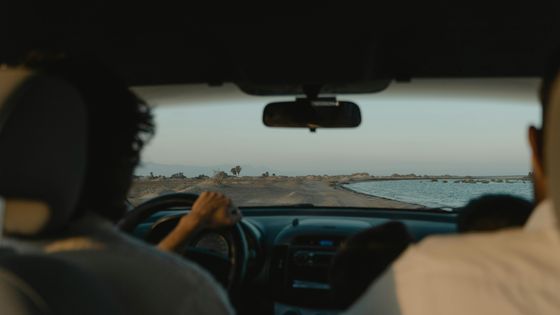
When the U.S. Highway 66 sign was hammered in for the first time in November 1926, no one was thinking about wakeboarding. The Mother Road was conceived for commerce and migration, a 2,448-mile ribbon connecting Chicago to Santa Monica across eight states, three time zones, and roughly a thousand small towns that would later build their identities around its neon. But a century on, as road-trippers retrace the route in restored Airstreams and borrowed rentals for the centennial, something about Route 66 has shifted. It isn’t just a highway anymore — it’s a vacation itinerary. And vacation itineraries, sooner or later, need water.
Good news: Route 66 has more of it than most people realize. From Lake Michigan’s shimmering start line at Grant Park to the Pacific surf breaking under Santa Monica Pier, the road is stitched together by reservoirs, rivers, and desert lakes where you can trade the steering wheel for a boat wheel for an afternoon. Getmyboat and Boatsetter, are two boat rental marketplaces that have done for boats roughly what Airbnb did for cabins, have extensive catalogs of boat offerings along the route. You can book a pontoon for the family in Missouri, a wake boat with a captain in Oklahoma, or a half-day sailing charter in California without ever owning a trailer.
What follows is a state-by-state map of where to break up the drive with a boat day. The stops are organized east to west, the way Dust Bowl migrants and Nat King Cole both sang it. Bring sunscreen. Bring a cooler. And bring the understanding that the real spirit of Route 66 was never about getting somewhere fast.
Illinois: A Starting Line on Lake Michigan
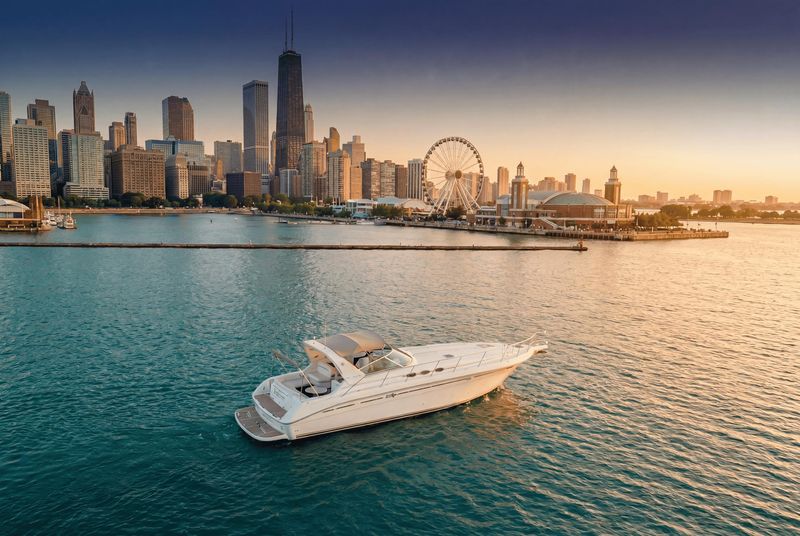
Route 66 officially begins at the corner of Adams Street and Michigan Avenue in Chicago, a few steps from the waterfront. Before you point the hood west, point your feet east — toward Monroe Harbor, DuSable Harbor, and Burnham Harbor, where Lake Michigan laps against one of the most dramatic skylines on the continent.
A few hours on the lake, watching the Willis Tower shrink behind a wake, makes the ensuing 2,400 miles feel like a proper pilgrimage rather than a commute.
If you’d rather stay on the road and wait to wet a line, tuck a note for a stop at Lake Springfield, a 4,000-acre reservoir just south of the Illinois state capital. Route 66 passes right by it, and local rentals — mostly pontoons and ski boats — still drift across waters that were already there when Bobby Troup wrote his song. It’s a quiet, underrated way to christen the trip.
Missouri: Float the Heartland
By the time you’ve crossed the Chain of Rocks Bridge into St. Louis, you’ve logged enough roadside diners and neon to feel properly on the journey. The Gateway Arch looks best from the river, and day sightseeing charters along the Mississippi are easy to book out of the downtown levee. But the real Missouri payoff is further down 66, in the rolling green folds of the Ozarks.
Between Rolla and Lebanon, the road brushes shoulder-close to one of the Midwest’s premier freshwater playgrounds: the Lake of the Ozarks, a 54,000-acre serpentine reservoir with more shoreline than the California coast. A modest detour south puts you in the middle of it. Here you can rent a tritoons (triple-hulled pontoons, faster and more stable than their predecessors), wakesurf boats, and the occasional 50-foot cruiser you can rent by the half-day with a captain included. Bagnell Dam, the original reason the lake exists, was itself under construction the same decade Route 66 was being paved — a pleasing bit of symmetry for the centennial.
If you have extra miles in you, push a bit further to Table Rock Lake near Branson. It’s clearer, quieter, and the afternoon light on the limestone bluffs is a reminder that not every good thing on this road trip requires neon to find it.
Kansas and Oklahoma: Big Water, Small Towns
Route 66 only clips Kansas for thirteen miles, through Galena, Riverton, and Baxter Springs — a fiercely proud stretch that turns that brevity into a badge. For a boat, though, you’ll want to nose across the Oklahoma line, where Grand Lake o’ the Cherokees opens up about forty minutes south. Forty-six thousand acres of water wrapped in limestone coves, Grand Lake has been a weekend retreat for generations of Tulsans and Kansans, and the marinas at Monkey Island and Ketchum carry everything from party barges to fishing skiffs rigged for crappie. Both rental platforms have an especially deep bench here; it’s one of the densest concentrations of available boats on the entire route.
Roll westward into Oklahoma City and you’ll cross Route 66 itself at Lake Overholser, a small, tree-shaded reservoir that appears in so many vintage Route 66 postcards that locals sometimes forget it’s actually a lake. It’s modest — better for kayaks, paddleboards, and a mellow pontoon afternoon than for water skiing — but there’s something apt about boating in the same water Americans have been boating in since Model T’s were the main traffic.
Between stops, the road through Oklahoma is flat-horizon country, and lakes like Tenkiller Ferry, north of Sallisaw, and Lake Eufaula, a short detour south of I-40, are where the locals spend their summer weekends. Captained charters are the easier choice for out-of-staters unfamiliar with the lake geography.
Texas: The Panhandle’s Secret Lake
Texas Route 66 runs straight and spare through the Panhandle — Shamrock, McLean, Groom, Amarillo, Vega, Glenrio — with shoulder horizons so wide they verge on theological. It’s also, not coincidentally, the stretch of the trip where a traveler feels most parched. Salvation, such as it is for boaters, lies just north of Amarillo at Lake Meredith, a 40,000-acre reservoir formed by the Sanford Dam on the Canadian River. It’s about a forty-mile detour from downtown Amarillo, which sounds long until you remember what forty miles means in a place this big.
Meredith’s water level has had its ups and downs, but in a good year it’s a welcome mirage — canyon walls of dusty red limestone, blue water, and the kind of quiet you don’t find east of the Mississippi. Listings lean toward fishing boats and pontoons, often captained.
New Mexico: The Unlikely Land of Lakes
The phrase “New Mexico boating” tends to stop people mid-sentence, but it shouldn’t. Route 66 runs through Santa Rosa, which calls itself the City of Natural Lakes with some justification — the town sits atop a series of artesian-fed sinkholes, including the famous Blue Hole, an eighty-foot-deep well of gin-clear water that draws scuba divers from three states. Blue Hole is too small for conventional boats, but Santa Rosa Lake State Park, a few miles north of the old alignment, is not. It’s an appealing stop for a half-day rental and a picnic.
Further west, about thirty miles above Tucumcari, Conchas Lake is the kind of place where the sky looks bigger than the water, and the water is already very big. State-park boat ramps, houseboats listed on both marketplaces, and wake boats for families that plan ahead — this is classic, slightly-off-the-beaten-track Route 66 exploration. And in Albuquerque, though the city itself is dry, short detours north lead to Cochiti Lake, a no-wake lake (unusually); bring a sailboat or a pontoon for leisure, not speed. You don’t have to be a Southwest obsessive to appreciate the contrast: two hundred miles of desert in every direction, and here you are, ankles cool, wake fanning out behind you.
Arizona: The Crown Jewel at Lake Havasu
If any single water stop justifies slotting a boat day into a Route 66 centennial run, it’s Lake Havasu. Technically you’ll need to detour south from Kingman on Highway 95, about an hour and twenty minutes off the historic alignment — but every mile is a negotiation the trip will forgive you for.
Havasu is a 45-mile stretch of the Colorado River dammed into a deep, cobalt-blue reservoir straddling the Arizona–California line. Its English reconstruction of London Bridge, trucked stone-by-stone from the Thames, is the best-known oddity, but the real appeal is the water: warm in summer, unusually clear, and wide enough to accommodate everything from wakesurfing weekends to long houseboat retreats. Both Getmyboat and Boatsetter maintain deep inventories in Havasu — possibly the deepest on the whole Route 66 corridor. You can rent a center-console for Copper Canyon exploration, a 22-foot tritoon for a family, or a captained yacht if you’d rather spend the day on the deck than at the helm.
A softer alternative, if you can’t make the Havasu detour, is Lake Mead, a short hop north of Kingman on a different road, where Hoover Dam backs up more than two hundred square miles of water in the Mojave. It’s a bigger lake with a different personality — more marina, more open water, more houseboats — but it belongs on the mental map of anyone doing Route 66 with a boat day in mind.
California: The Finish Line, with a Stop in the Mountains
Route 66 threads through California more tentatively than through the states before it, alternately disappearing into I-40 and I-15 before resurfacing in Barstow, San Bernardino, Pasadena, and finally the Santa Monica Pier. Two mountain lakes deserve consideration as you close in on the coast. From San Bernardino, short drives into the San Bernardino National Forest bring you to Lake Arrowhead (private, but with legitimate rentals available through brokers) and Big Bear Lake (public, and both rental marketplaces have abundant listings). Big Bear in particular is pine-scented and alpine enough that you may forget you’re technically still in Southern California.
And then there’s the end of the road. Route 66 terminates, officially, at the corner of Ocean Avenue and Santa Monica Boulevard, just above the pier. From there, the natural move for a boater is the Pacific. Marina del Rey, a few miles south, is one of the largest man-made small-boat harbors in the country, and both platforms carry a wide selection of sailing charters, sportfishers, and day cruisers available for coastal runs. A sunset sail out of Marina del Rey — the centennial cake-and-candles moment of the trip — costs less than you’d think.
Making the Trip Yours
A few practical notes, offered lightly. Rental inventory on both Getmyboat and Boatsetter is broad. In the big summer markets — Lake of the Ozarks, Havasu, Marina del Rey — you’ll want to book weeks out; in the quieter ones — Lake Meredith, Conchas, Overholser — you can often book days ahead. Captained trips are the forgiving choice when you’re new to a given body of water, and they free the driver to actually look around. Bareboat (no-captain) rentals require appropriate credentials and experience, but are a great value if you have them.
If you’re building a Route 66 centennial itinerary and want to thread one or two boat days into it, the four best candidates, logistically, are Lake of the Ozarks in Missouri, Grand Lake in Oklahoma, Lake Havasu in Arizona, and Marina del Rey at the finish. Start there; everything else is gravy.
One Hundred Years, One Long Ride
A century on, Route 66 remains what it was when it opened: a road built for people taking their time. The addition of a boat day — or three, for the ambitious — is less a departure from that spirit than an extension of it. A wake off the stern, a faint neon outline across a lake at dusk, the quiet of a cove after a morning of highway wind. The Mother Road was never really only about the road. It was about the country it ran through, and the way that country opens itself to you when you slow down.





 4.9 out of 5! 500,000+ reviews